
Signal Fires on the Headlands
Elevated fires and simple daymarks warned coastal traffic before permanent towers defined the route.

Coastal Archive
Explore archival photographs, keeper voices, and preserved towers that trace how these beacons shaped life along the northern shore.
Explore the ArchiveHistory timeline
Six milestones trace how northern coastal beacons moved from working infrastructure into shared cultural memory.
Elevated fires and simple daymarks warned coastal traffic before permanent towers defined the route.
Masonry beacons brought a lasting nighttime presence to exposed points along the northern shore.
Precision optics concentrated lamp light into stronger beams that could be recognized farther offshore.
Trimming wicks, polishing glass, recording weather, and maintaining the station made the light dependable.
Electric lamps and remote controls reduced permanent staffing while keeping many established signals active.
Surviving towers endure as navigational landmarks, historic structures, and records of coastal life.
Short editorial fragments tracing routine labor inside northern coast lantern rooms, assembled from recurring keeper duties in archival records.
Interpretive note: these entries are narrative reconstructions based on common keeper responsibilities and maintenance logs. They are not direct quotations or named personal testimony.
Interpretive fragment
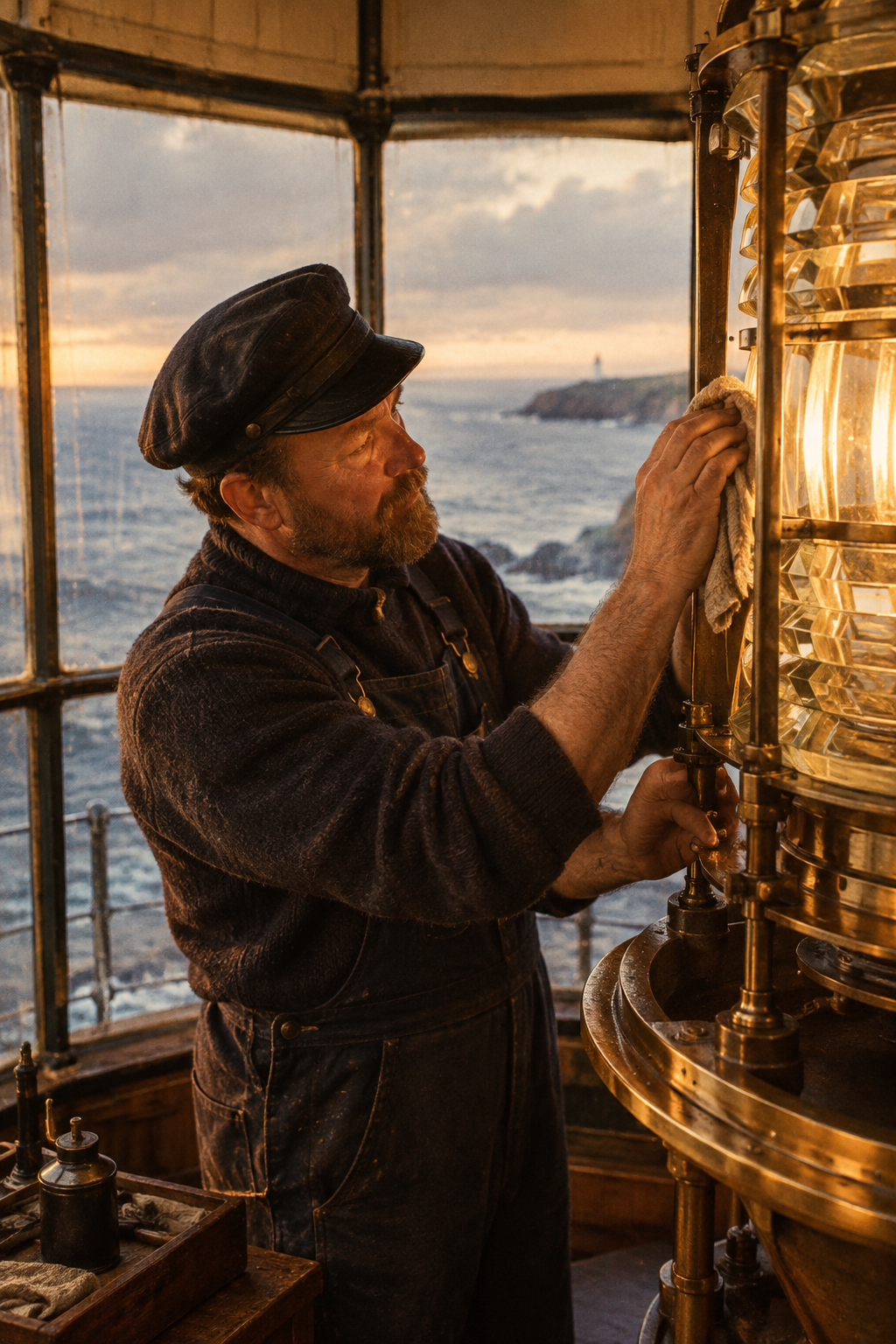
The Night Watch
The work was repetitive by design: glass polished, fuel checked, weather entered, and every mechanism listened to before darkness settled.
Interpretive fragment
The Storm Log
During hard weather, the station became its own small world. The keeper watched the beam, the barometer, and the line where surf erased the path.

Interpretive fragment
The Family Station
Meals, lessons, repairs, and long waits filled the daylight hours. The tower shaped family life as surely as it guided passing ships.

Preserved Towers
Locations are shown as an interpretive coastal guide to relative position and preservation context, not measured coordinates.
Legend
Illustrative map — not for navigation.
Photographic record
A contact-sheet view of towers, labor, weather, and shoreline textures gathered across the northern coast.
Interpretive renderings are used unless a documented archival source is explicitly named.

Early coastal station era
A solitary tower seen from the landward approach, with dune grass softening the horizon.
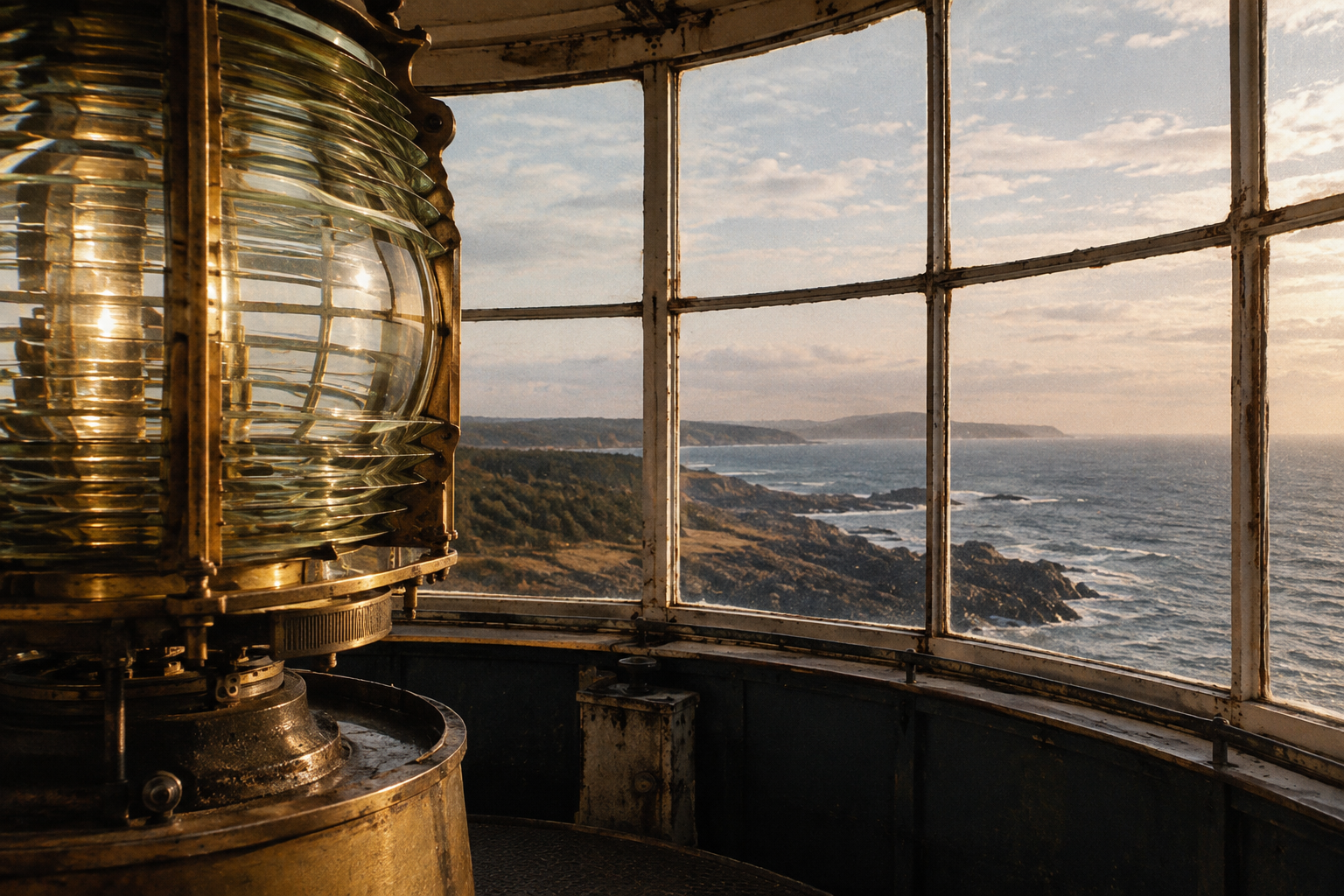
Keeper-service era
Glass, brass, and the curved horizon meet where the working light was tended each night.
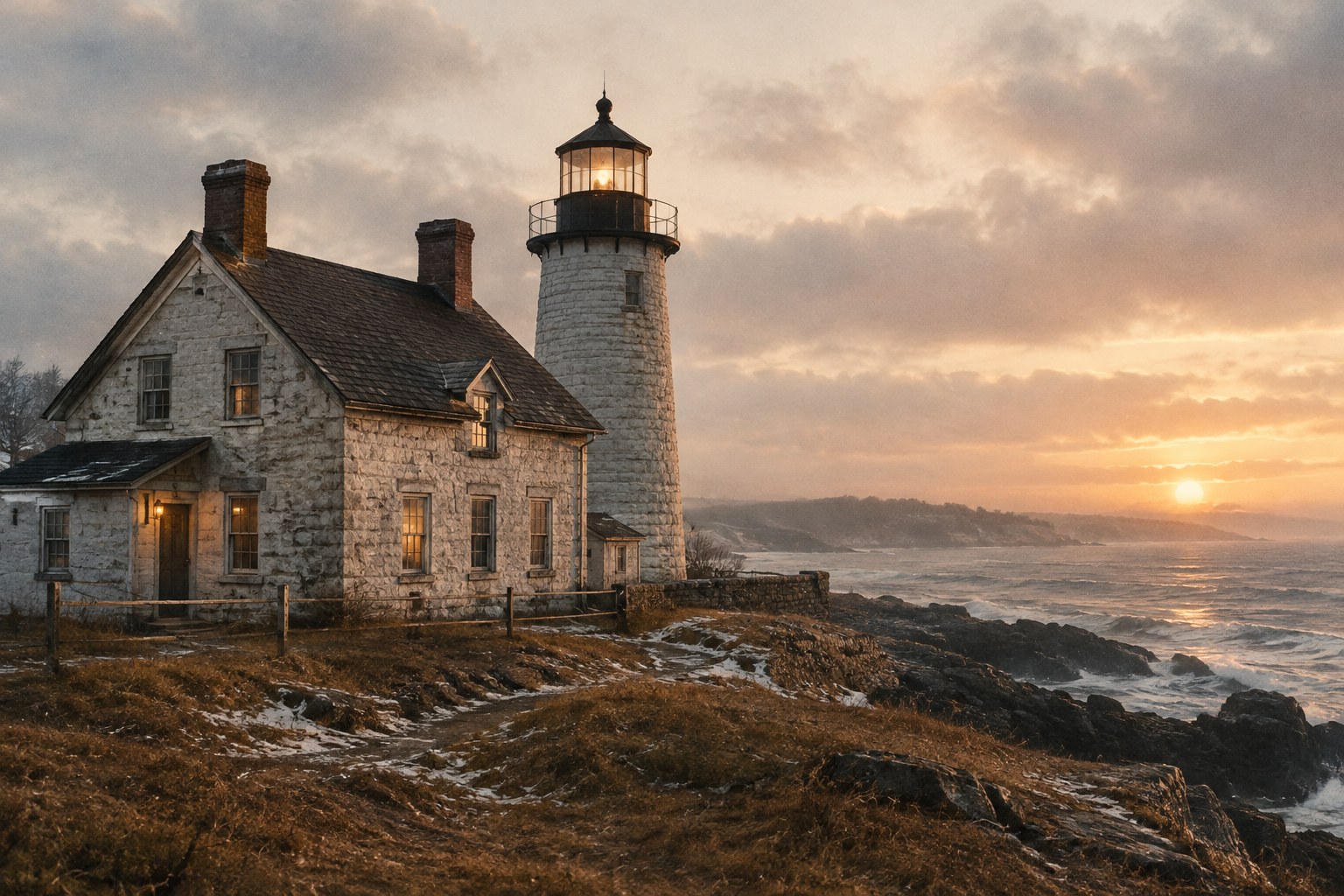
Station life
Domestic rooms stood close to the tower, joining ordinary routines to the demands of the signal.
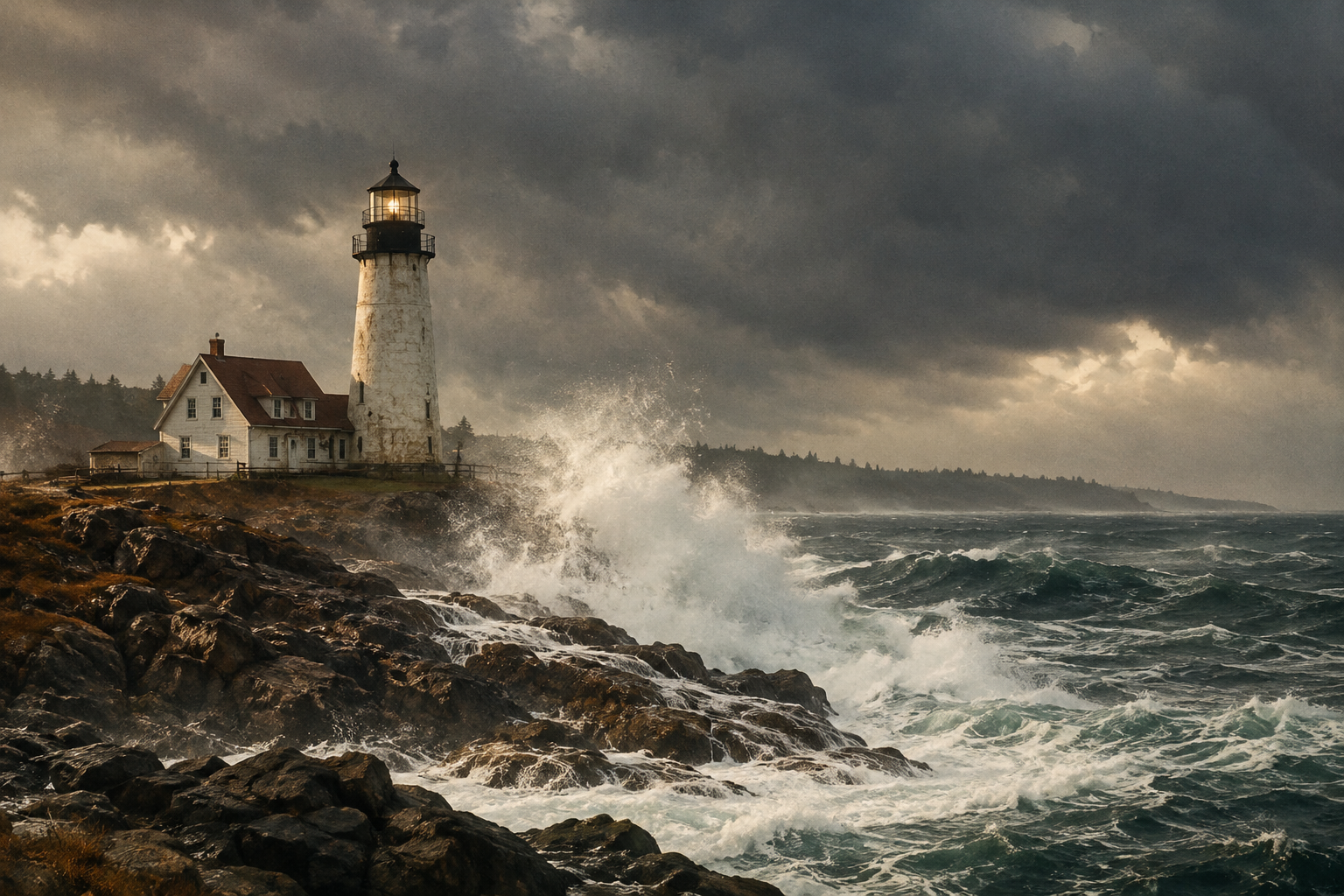
Storm season
Spray and low cloud could reduce the coast to a few hard lines and the repeated sweep of a beam.
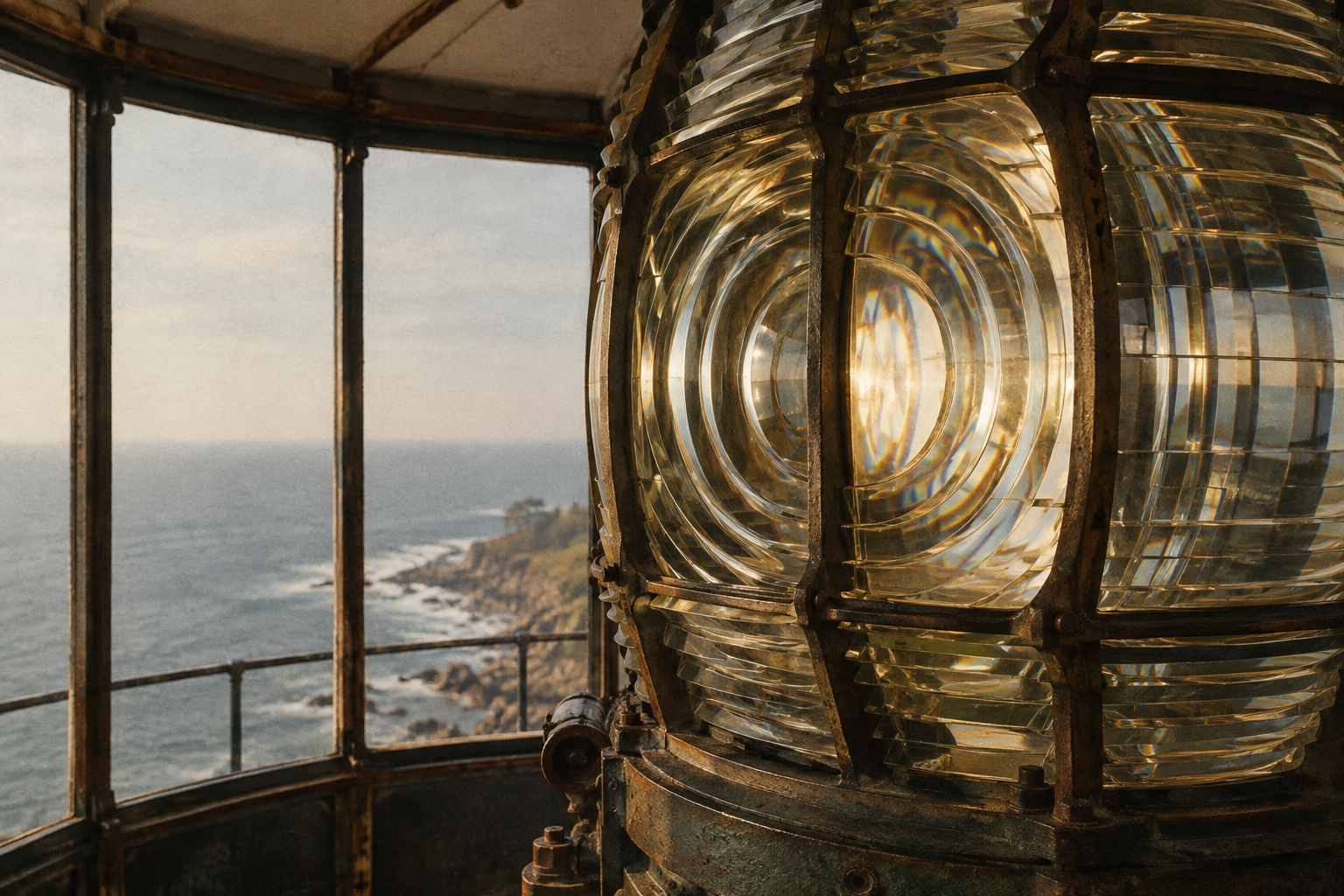
Optical modernization
Cut glass redirected a modest flame into a disciplined pattern visible far beyond the station.
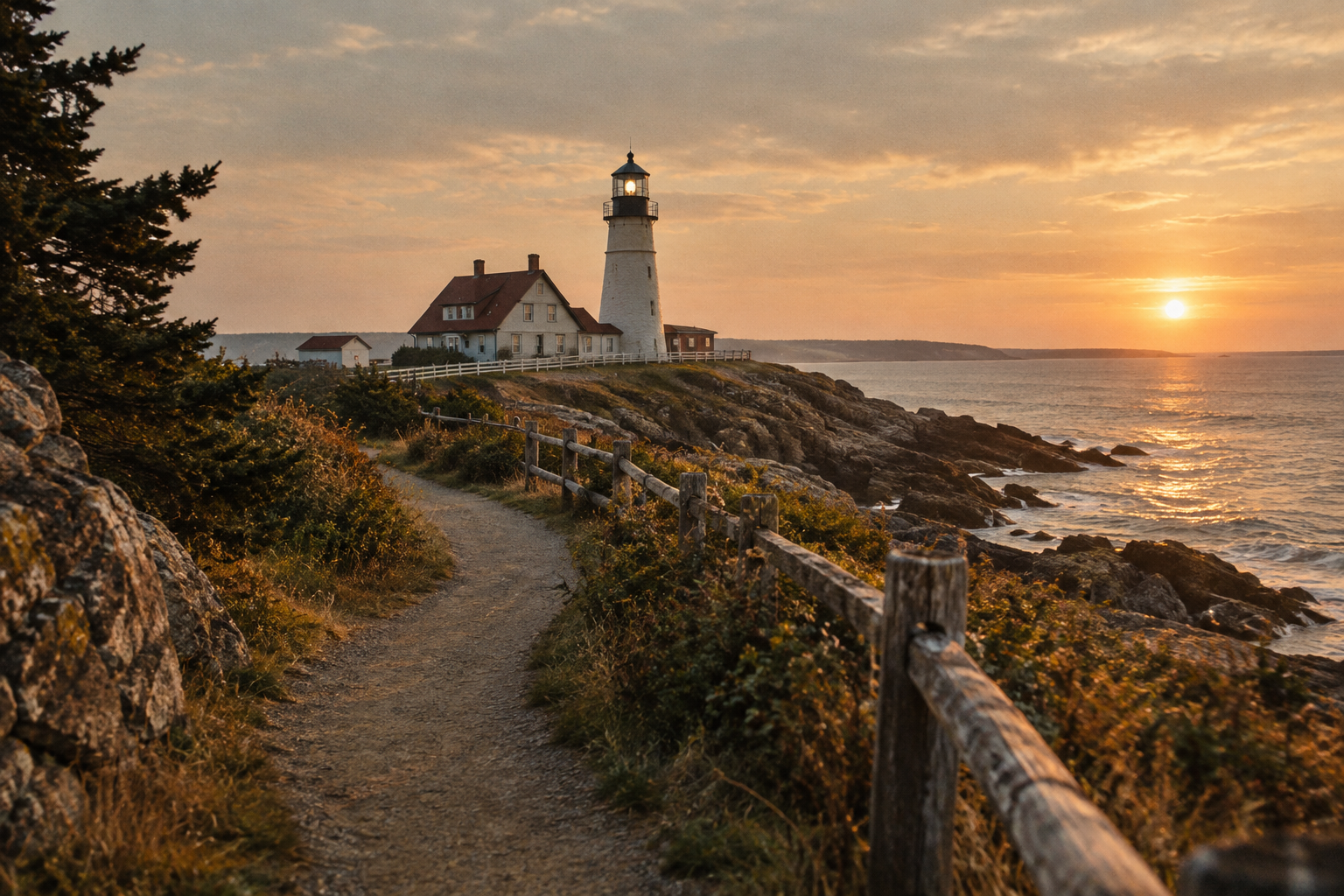
Preservation era
The path to a surviving tower remains part of how visitors understand its scale and isolation.